Key Takeaway Differences in hair mineral analysis results between laboratories are most often caused by sample preparation procedures, analytical methods, quality control, and interpretation practices — rather than by the HTMA method itself. Why Do HTMA Results Sometimes Differ? Hair(...)
The Laboratory as a Partner, Not Just a Service Provider In life science projects, the role of analytical laboratories increasingly goes beyond simple order fulfillment. In mature research projects, cooperation does not begin at the moment samples are submitted for(...)
Why a Single “Result” Is Not Enough In elemental analysis, it is easy to focus exclusively on numerical values such as concentrations, reference ranges, or differences between samples. However, in scientific and business practice, a result alone has little real(...)
Elemental analysis of hair and fur has been used for many years in scientific research in the fields of biomonitoring, environmental sciences, veterinary medicine, and population studies. Interest in this type of biological material arises primarily from its usefulness in(...)
Inductively Coupled Plasma Optical Emission Spectrometry (ICP-OES) has for many years been one of the key techniques used in elemental analysis in research and diagnostic laboratories. This method is applied both in scientific research and in analyses performed for B2B(...)
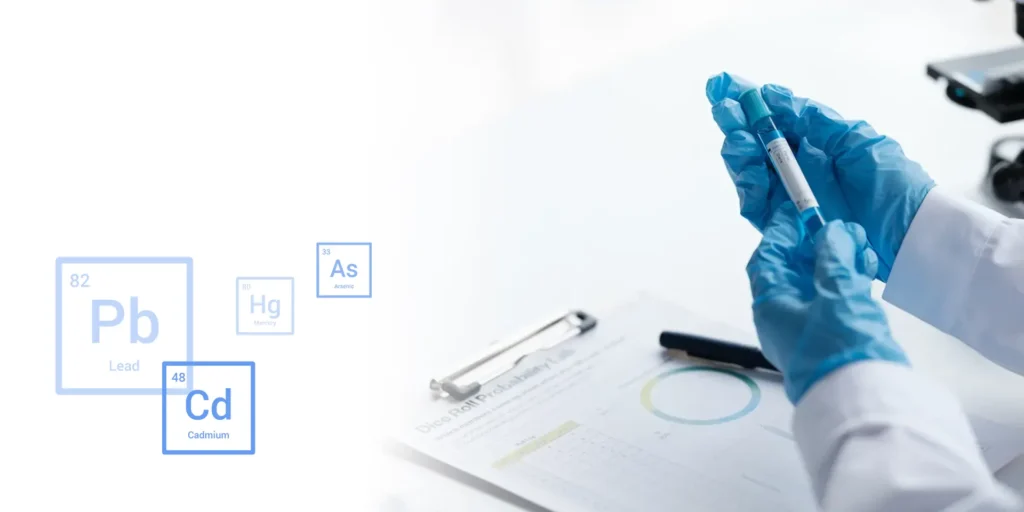
Toxic heavy metals — such as arsenic (As), mercury (Hg), cadmium (Cd), and lead (Pb) — are among the most dangerous environmental contaminants. Even low-level exposure can lead to metabolic, neurological, hormonal, and immune disturbances. The paradox is that blood(...)
Hair Tissue Mineral Analysis (HTMA) is one of the most commonly used methods for assessing long-term mineral balance, metabolic rate, and exposure to heavy metals. Although the method is gaining increasing interest in biochemistry, clinical dietetics, and functional medicine, questions(...)
Introduction Inductively Coupled Plasma Optical Emission Spectrometry (ICP-OES) is one of the most highly regarded methods for elemental determination in biological samples, food, water, and environmental materials. Thanks to its high sensitivity, repeatability, and wide dynamic range, ICP-OES is now(...)