Mineralco P.S.A. is an independent analytical laboratory that performs elemental analysis of entrusted samples using ICP-OES (Inductively Coupled Plasma Optical Emission Spectrometry). The laboratory performs laboratory analysis only — without interpreting results, offering opinions, or making diagnoses. For LifelineDiag customers, this means a clear division of roles: Mineralco is responsible for precise measurement, while LifelineDiag handles the service, the report, and its explanation.
What does the Mineralco laboratory do?

Mineralco P.S.A. specializes in the elemental analysis of entrusted biological samples, including hair samples, using ICP-OES technology. The laboratory’s scope of activity is deliberately narrow and clearly defined: measuring the elemental content of a sample, without offering opinions, clinical interpretation, or diagnosis. Results are provided as raw data to partners — including LifelineDiag, which prepares a report for the end customer based on this data.
Technology — PerkinElmer ICP-OES spectrometers
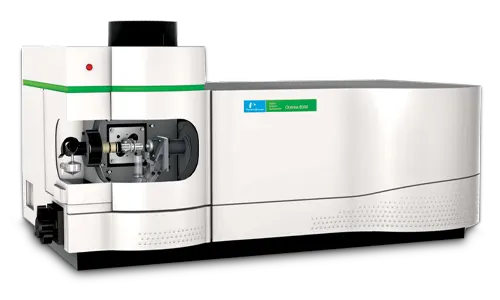
The laboratory operates sequential scanning ICP-OES spectrometers, the Avio 200 and Optima 8000 (PerkinElmer), designed for high measurement accuracy.
What and how we analyze
ICP-OES is one of two validated, most widely used techniques for elemental determination in biological material (alongside ICP-MS) — differences between results from commercial laboratories mainly stem from the quality of the analytical process (calibration, sample preparation, quality control), not from the measurement concept itself [1][2].
The process — from sample to result
- The sample arrives at the laboratory once the minimum mass and collection requirements are met (see how to properly collect a hair sample).
- The sample undergoes mineralization and preparation according to laboratory procedure.
- Measurement is performed on an ICP-OES spectrometer (Avio 200 or Optima 8000).
- The result, in the form of raw data (PDF/CSV), is sent to the client — the laboratory does not interpret the results or offer any opinion.
More on how quality control (QA/QC) affects the reliability of results: How Does Quality Control (QA/QC) Affect the Reliability of HTMA Results?
Is the Mineralco laboratory accredited?
Mineralco does not currently hold formal laboratory accreditation (e.g., ISO/IEC 17025 or an equivalent accreditation). The reliability of the process is based on: a validated analytical method (ICP-OES), PerkinElmer-grade analytical equipment, documented quality control, and process transparency — the laboratory provides raw data without interpretation, which limits the risk of error from subjective judgment at the measurement stage.
Relationship with LifelineDiag
Mineralco serves as the laboratory and technological backbone for LifelineDiag. The division of roles is simple: Mineralco performs the elemental measurement of the sample, while LifelineDiag is responsible for ordering, customer service, report preparation, and its explanation in an educational context. This division allows each brand to focus on its role: Mineralco on measurement precision, LifelineDiag on service and customer communication.
FAQ
The laboratory analysis is performed by Mineralco P.S.A., using ICP-OES technology (PerkinElmer Avio 200, Optima 8000). LifelineDiag is responsible for ordering, the report, and customer service.
No, the laboratory does not currently hold formal accreditation (e.g., ISO 17025). Process quality is based on the validated ICP-OES method, PerkinElmer-grade equipment, and documented quality control.
ICP-OES is one of two validated methods (alongside ICP-MS) most widely used for elemental determination in biological material, characterized by high precision and repeatability when the process is carried out correctly.
No. Mineralco provides only raw measurement data (PDF/CSV). Interpretation and the report for the end customer are prepared by LifelineDiag.
Up to 100 samples per day, with a spectrometer warm-up time of about 10 minutes.
Bibliography
- Bass D.A., Hickock D., Quig D., Urek K.Trace element analysis in hair: Factors determining accuracy, precision, and reliability.Biological Trace Element Research. 2001;83(1):1–16.
- Seidel S., Kreutzer R., Smith D., McNeel S., Gilliss D. Assessment of commercial laboratories performing hair mineral analysis.JAMA. 2001;285(1):67–72.